




How to protect yourself from fraud?
-
Do not share your credit card details or PIN codes.
-
Do not share your contact information (email, phone number, address) on social media with strangers.
-
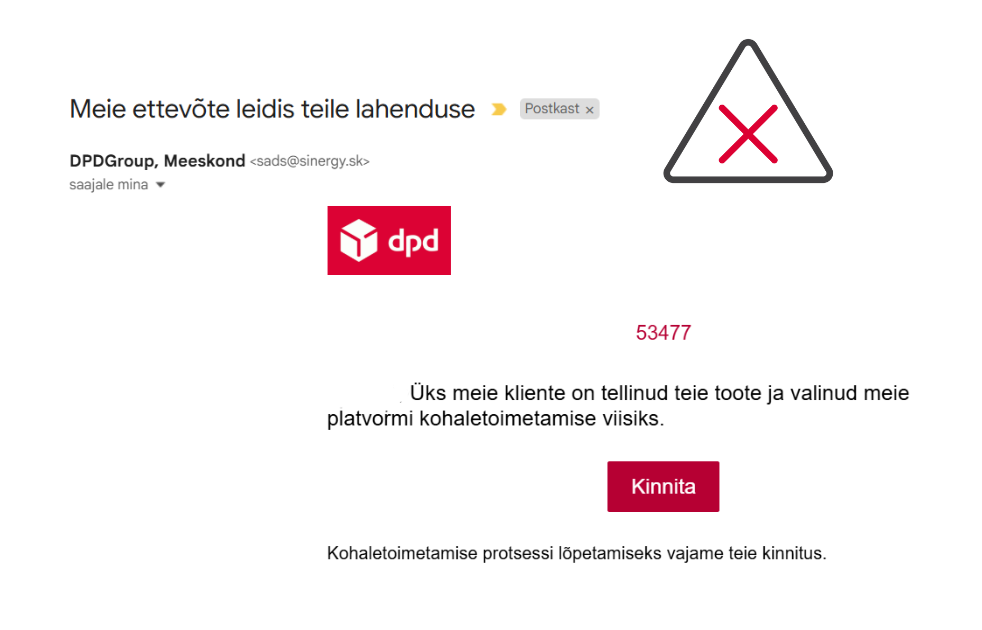
Verify the email address from which the message was sent. If the email does not arrive from an official DPD email address, it is an email fraud. DPD does not send emails from other addresses (e.g. @gmail.com, @hotmail.com and other such domains).
-
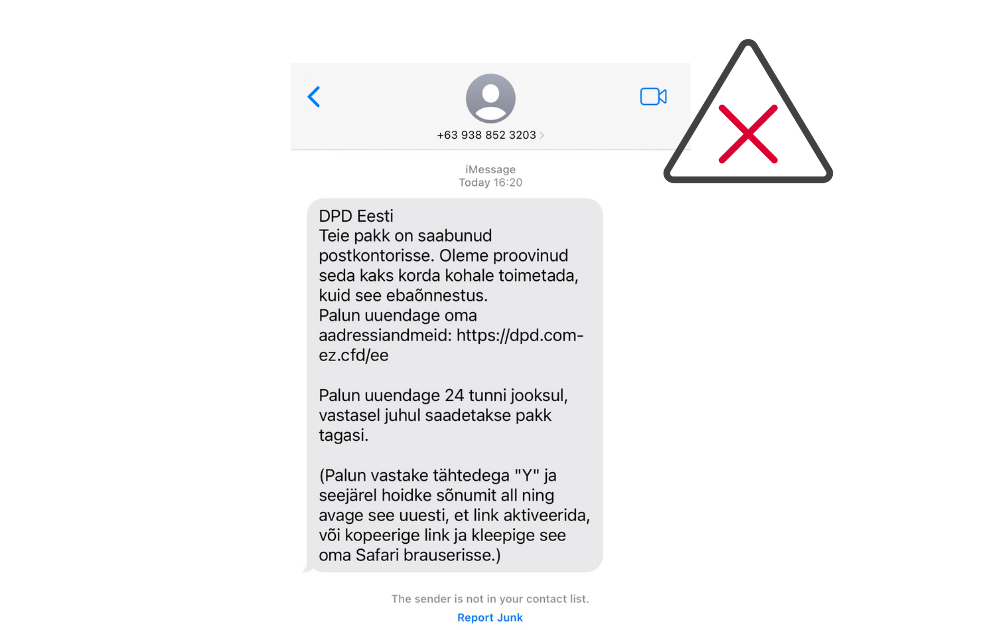
Pay attention to the spelling and content of the letter. Be thorough when reading the letter or visiting the website, there are often many spelling mistakes and the word usage is unclear.
-
If you receive a suspicious phone call, end it immediately. Do not call back the number from which the call came. Instead, contact DPD Customer Service directly at +372 613 0012.
-
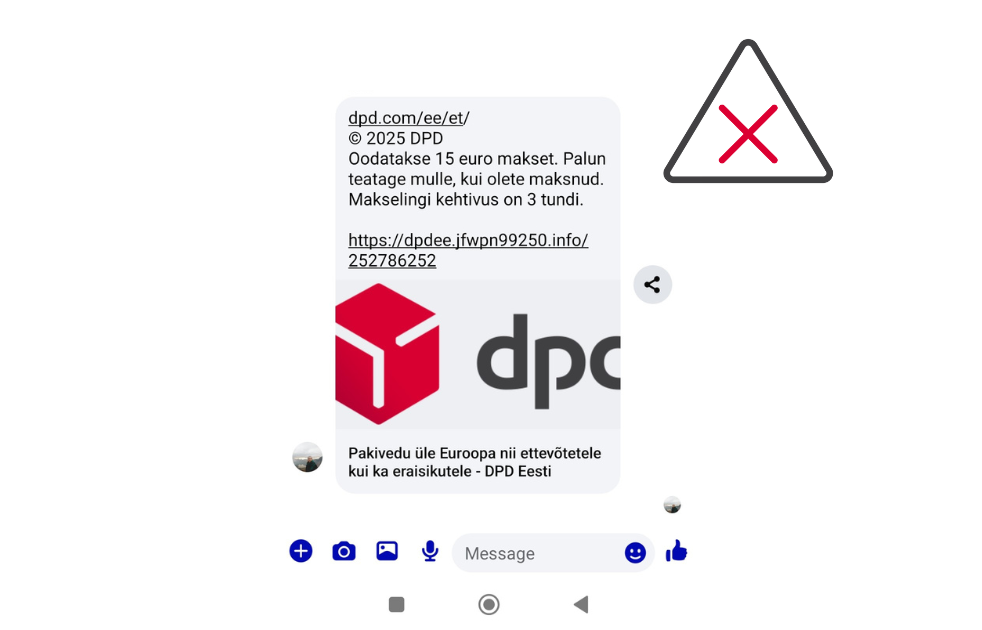
DPD does not ask for extra fees for insurance or other additional services. The recipient will only pay for a parcel if they have ordered it with the Cash-on-Delivery service. In the case of a Card-on-Delivery parcel, we always send an SMS to the recipient, stating the exact sum which must be paid upon delivery. If you do receive a Card-on-Delivery parcel from DPD, this must be paid for upon receipt directly to the courier or at the parcel locker.
-
Do not pay Card-on-Delivery fees for parcels you did not order.
-
If you suspect that you have been sent a fraudulent email, do not open any links or attachments sent with the message.
-
Your first choice should always be a trustworthy online store.
How to protect yourself from fraud?

-
Do not share your credit card details or PIN codes.
-
Do not share your contact information (email, phone number, address) on social media with strangers.
-
Verify the email address from which the message was sent. If the email does not arrive from an official DPD email address, it is an email fraud. DPD does not send emails from other addresses (e.g. @gmail.com, @hotmail.com and other such domains).
-
Pay attention to the spelling and content of the letter. Be thorough when reading the letter or visiting the website, there are often many spelling mistakes and the word usage is unclear.
-
If you receive a suspicious phone call, end it immediately. Do not call back the number from which the call came. Instead, contact DPD Customer Service directly at +372 613 0012.
-
DPD does not ask for extra fees for insurance or other additional services. The recipient will only pay for a parcel if they have ordered it with the Cash-on-Delivery service. In the case of a Card-on-Delivery parcel, we always send an SMS to the recipient, stating the exact sum which must be paid upon delivery. If you do receive a Card-on-Delivery parcel from DPD, this must be paid for upon receipt directly to the courier or at the parcel locker.
-
Do not pay Card-on-Delivery fees for parcels you did not order.
-
If you suspect that you have been sent a fraudulent email, do not open any links or attachments sent with the message.
-
Your first choice should always be a trustworthy online store.

