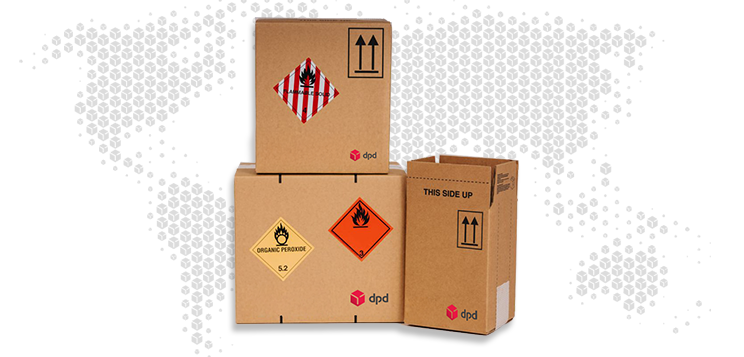
DPD provides a dedicated service for shipping Dangerous Goods in Limited Quantities, ensuring the safety of all parties involved – sender, recipients and our employees – and respecting current regulations (ADR).
Through a series of special precautions and adaptations to our transport process, we have built a solution that allows you to ship (almost) all types of Dangerous Goods in Limited Quantities, such as perfumes or aerosol sprays, lithium batteries.
Dangerous goods are any harmful or hazardous materials that, during their manufacture, storage, transport, or use, may generate or release fumes, gases, vapors, dust, or fibers of a hazardous nature.
This includes explosives, flammable, toxic, infectious, radioactive, corrosive, or irritating substances, in quantities likely to cause injury or damage, even when not in transit.
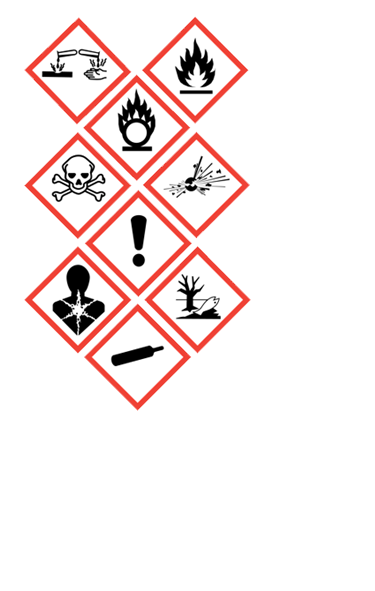
Class 1: explosive materials
Class 2: flammable/toxic gases
Class 3: flammable liquids
Class 5: oxidizing substances/organic peroxides
Class 6: toxic/infectious substances
Class 7: radioactive substances
Class 8: corrosive goods
Class 9: miscellaneous
Note: The transport of Class 1 (explosive) and Class 7 (radioactive) goods is prohibited on the DPD network.
To minimize risks in the transport of dangerous goods, DPD transports them in small quantities (LQ). Under these conditions, these goods generally present lower risks than in large quantities, exempting them from compliance with some regulatory requirements.
This does not exempt any of the parties involved in the operation from their respective responsibilities.
All hazardous materials in the classes listed above are prohibited from circulating on the DPD network, except when shipped in limited quantities, with all necessary information and an approved account for shipping this type of merchandise.
The transport of Class 1 (explosive) and Class 7 (radioactive) goods on the DPD and Geopost transport network is expressly prohibited.
ADR is the European Agreement concerning the International Carriage of Dangerous Goods by Road. Established in 1957, this agreement covers all companies and individuals involved in the loading, transport, and unloading of dangerous goods. This applies to all levels of the distribution chains, namely: manufacturers, shippers, packers, drivers, and warehouse operators.
To ship limited quantities of hazardous materials, you will need to provide a range of different data at the time of shipment, including:
Un Number: unique identifier code for the type of substance
Class code: substance class code (corrosive, explosive, etc.)
Packing Group: This data refers to the degree of danger that the asset represents, where PG1 = low danger; PG2 = medium danger; PG3 = high danger.
This information is available in a list on your customer portal – provided at the time of shipment – you just need to select the option that applies to your shipment.
If you wish to ship hazardous materials in limited quantities, you must be a DPD customer and request this from your Sales Manager. Together with your Manager, a risk analysis will be conducted to determine if you meet the necessary conditions to carry out this type of shipment.
Consult the Regulation of the European Agreement concerning the international carriage of dangerous goods by road.
Please refer to the General Terms and Conditions of Carriage.
Home / Dangerous Goods in Limited Quantities